
Automations that show their work
Each one below runs end to end. Every number on these pages comes from a real test run, not an estimate — and each page says plainly what was proved and what was not.
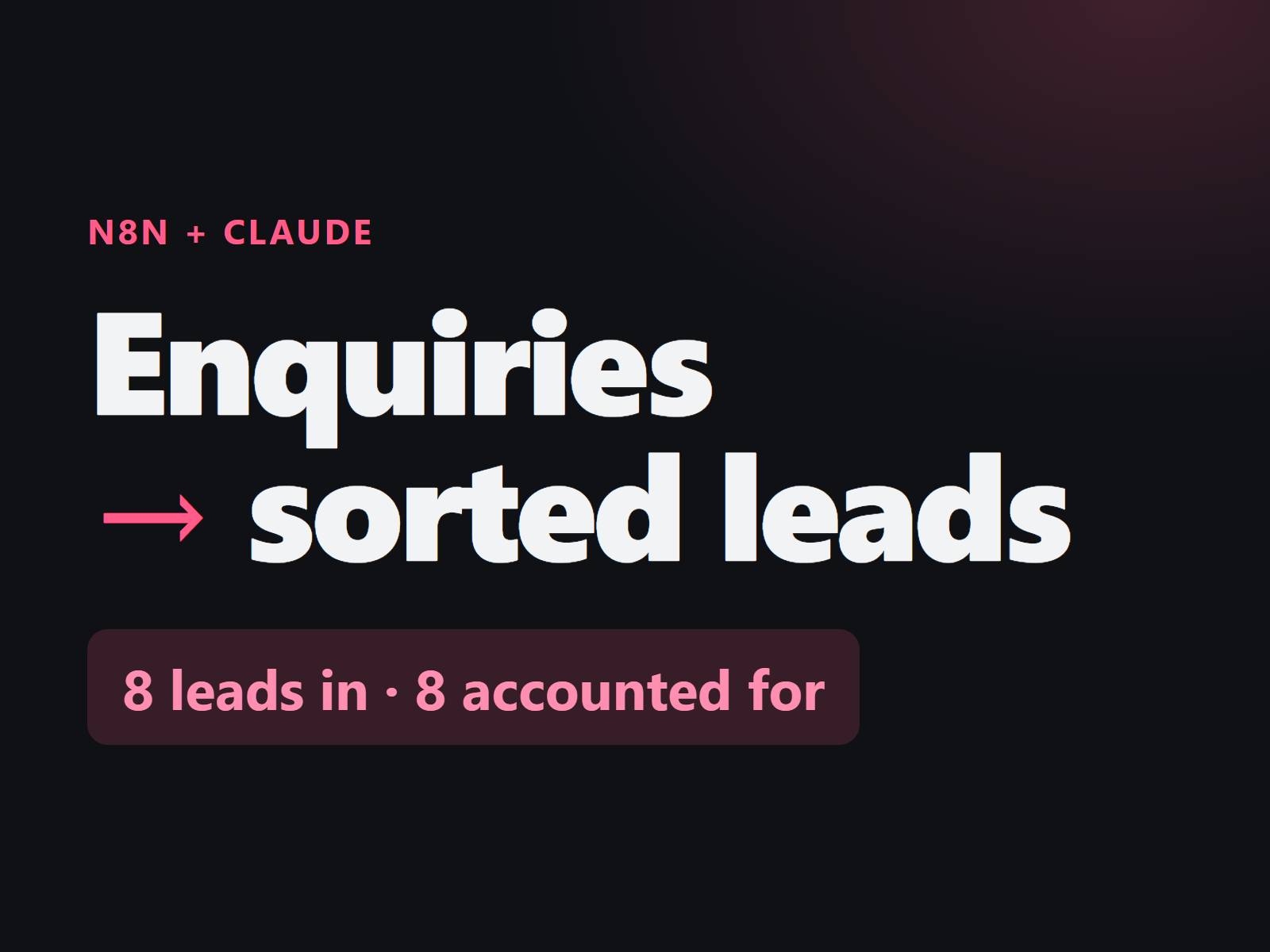
Lead intake and qualification
Every enquiry scored and sent to the right team, with a tracker and a live dashboard behind it.
8 leads in, 8 accounted for
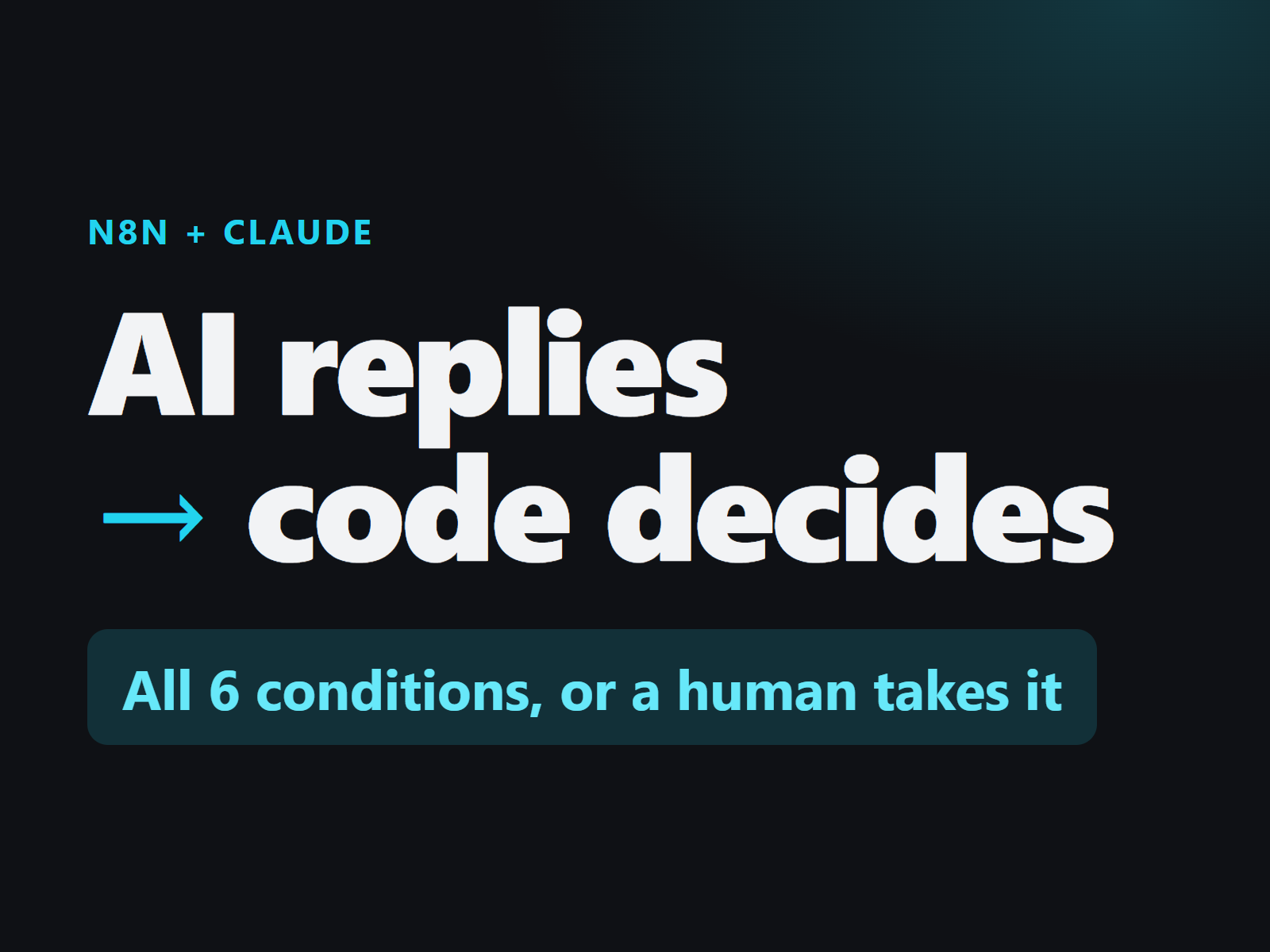
AI customer service agent
It answers from your own information — and a separate check decides whether that answer may be sent.
6 conditions before any auto-reply
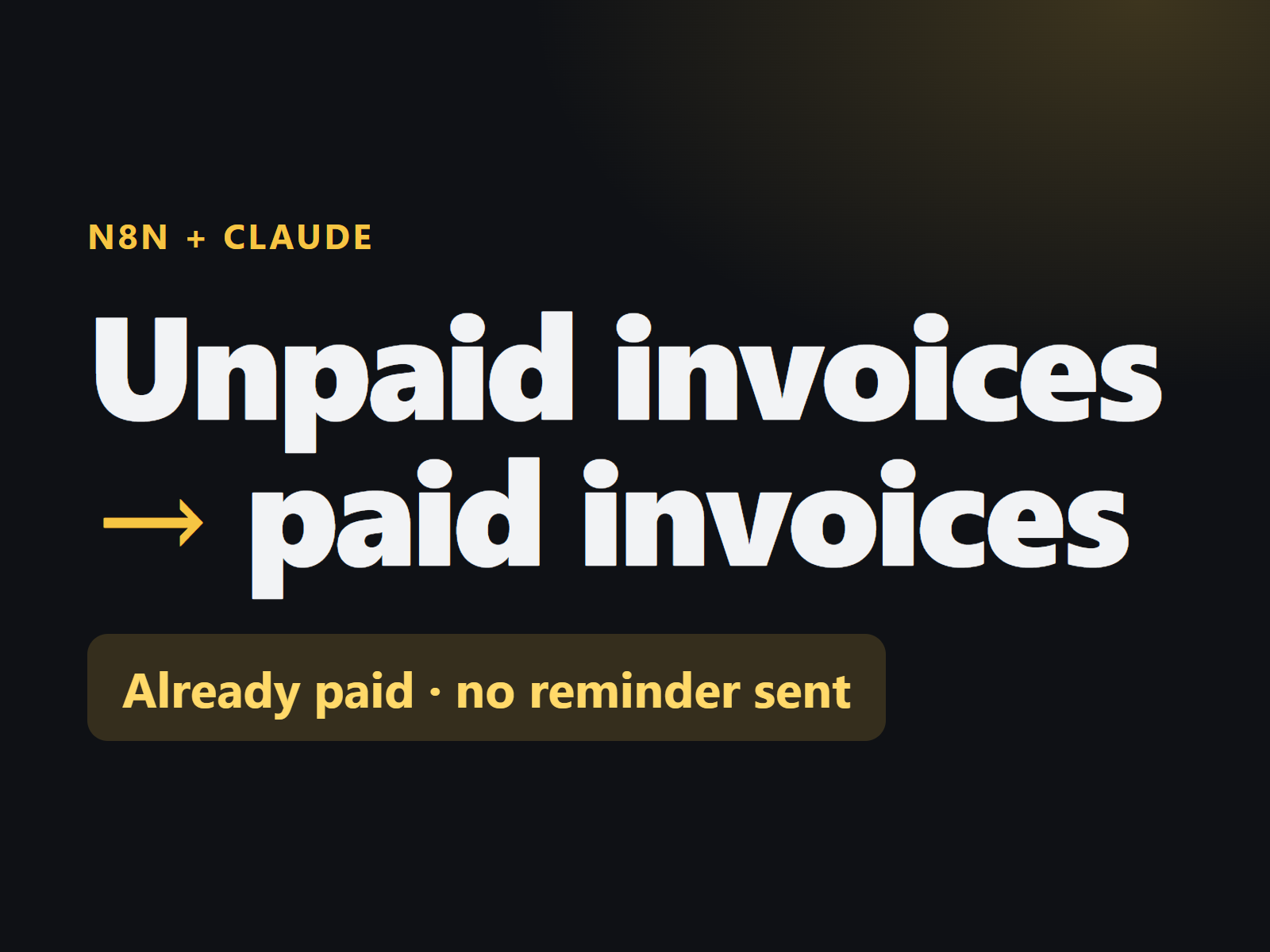
Getting invoices paid
Payments are matched first, so nobody is chased for an invoice they already settled.
Caught a payment that landed yesterday
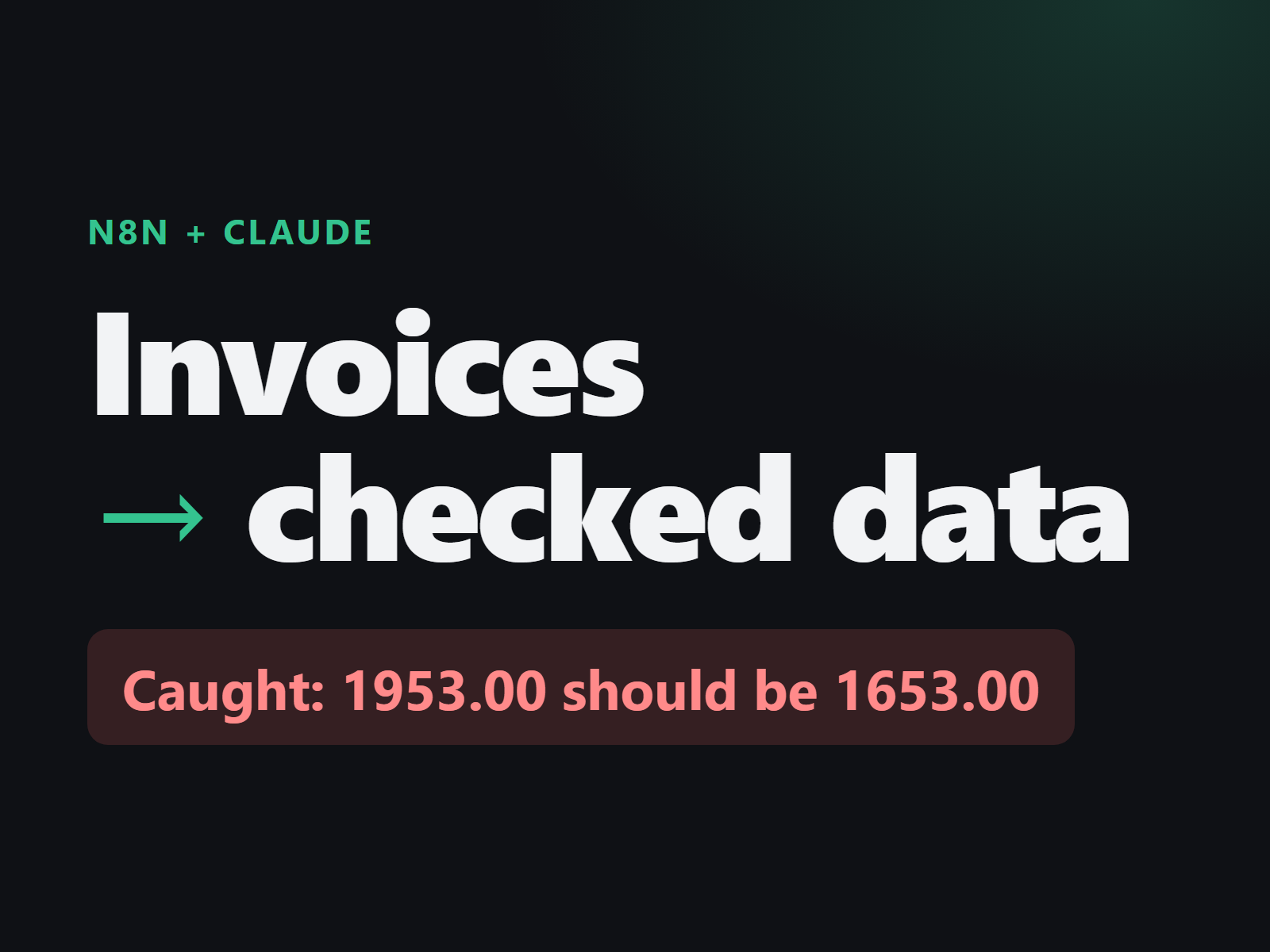
Invoice data extraction
The AI reads the invoice; plain code checks the arithmetic, because a model cannot audit itself.
Caught: 1953.00 should be 1653.00

Competitor price monitoring
A plain comparison finds what changed. The AI only writes about the things that really did.
Price change spotted: 89 → 109/mo

Content repurposing
The facts are pulled out once, so five channel-specific posts cannot contradict each other.
5 of 5 channels produced
How these are built
The same three rules run through all six.
The AI reads. The code decides.
A model is good at reading a document or writing a sentence, and unreliable at being the final word. So the AI produces facts or wording, and plain code decides what happens with them. The same input always reaches the same outcome, and every rule is readable.
Unclear goes to a person.
Every build has a path for the cases it should not handle alone — and that path carries the reason, so whoever picks it up does not have to start from scratch.
Nothing is counted as done without a run.
Each page quotes the item counts from a real execution: how many went in, how many came out, and where the rest went. Where something was not tested, the page says so.